Is Crypto in Your Future?

Crypto was a hot topic at spring and annual conferences of many government associations as industry advocates swarmed to gain attention and government officials sought to understand if/whether/how crypto might be implemented in their organizations.
- The buzz is long on promise and concept but short on real experience. Crypto assets are barely a rounding amount in the financial accounts of American businesses, governments and households.
- Yet marketing agents and some energized constituents are urging government organizations to act on the vision now.
- Will crypto benefit your government? Is it legal for you? Is it prudent? These are key questions. To help you answer them here is a brief primer.
Why Crypto?
Promoters tout crypto’s potential to revolutionize payments technology and provide safe alternatives to bank deposits and money fund/LGIP investments. And the Trump administration, which has pushed to make the United States and the dollar the center of a global crypto industry, foresees explosive growth of USD stablecoins from barely $300 billion to $2 trillion in 2028.
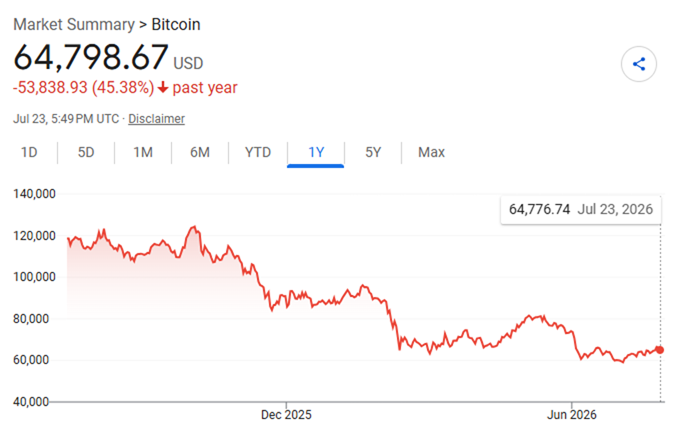
A year ago, eager investors focused on the skyrocketing value of Bitcoin, thinking that crypto was a good place to invest, and some taxpayers argued that public funds should be invested in crypto to help pay for the cost of government (and reduce taxes), Today, after Bitcoin lost 45% of its value, that pressure likely has abated and the crypto pitch now focuses on the payment technology aspects of crypto.
The Basics
When you think about whether crypto is appropriate for your organization, start with the basics. Crypto, shorthand for cryptocurrency, is a digital form of money. It has two purposes: facilitating payments and storing value. For 200 years banks have dominated these activities. More recently money market funds (and LGIPs) have evolved to be an alternative for storing value but their role in payments activities is limited.
Blockchain, the platform on which crypto is built, is a system of distributed ledger accounting. It has the potential to enhance or—some would say replace—the current means of making and receiving payments and recording ownership of value.
Blockchain can be used to record ownership of all sorts of assets, but let’s limit our consideration to stablecoins. These assets have some of the characteristics of money and are the subject of the Genius Act that was enacted a year ago to legitimize dollar-backed stable value crypto by establishing a federal regulatory framework.
From the promotional efforts, one might think crypto is a large and rapidly growing presence in the financial markets. But stablecoins represent a very small slice of overall liquid assets. Their total value is around $300 billion globally and U.S.-based stablecoins are probably half of the global amount. For scale, consider that U.S. bank deposits represent $19 trillion, direct ownership of Treasuries by U.S. resident accounts total around $16 trillion and money market fund assets total more than $8 trillion.
Should You Use Crypto for Payments?
You might want to accept stablecoins in payment of taxes and fees for government services or you might use stablecoins to pay third parties. Promoters argue that it is faster (“24/7”), safer (“bank fraud is rampant”) and more flexible (“you can post collateral almost instantly “or “easily place your money in a stable account within the crypto ecosystem in between crypto asset trades”).
To do so you would have to open an account with a Permitted Payment Stablecoin Issuer (“PPSI” under the Genius Act) or create a wallet to hold the asset directly on a decentralized account subject to blockchain protocols. The Genius Act regulates PPSIs. These accounts may or may not be subject to equivalent regulatory oversight and capital equivalent of banks that offer payment and custody services because regulations are still being written, though the general sense is that they will be subject to fewer strictures. And you should consider the counterparty risk of dealing with a specific PPSI.
To create a wallet on a decentralized blockchain you’ll confront a host of legal and internal controls issues that may be unique to your organization’s policies and procedures.
The issues for a government finance official are whether law and policies permit payments to be made and received in forms other than U.S. dollars and whether the public agency is permitted to hold assets in the form of crypto.
A few government entities have taken initiatives to facilitate crypto payments. The state of Wyoming created its own stablecoin to facilitate payments among state agencies. It should be noted that after one year the total value outstanding is about $1 million. The Bank of North Dakota created Roughrider Coin late last year to facilitate bank-to-bank transfers, though it’s not clear whether it is yet in use.
Which Stablecoins Should You Use?
Think about currency issued by banks 200 years ago. Each “dollar” had a different value depending on the backing of the issuing bank. That was a challenge to business and commerce that was overcome by national banking and a single fiat currency (the U.S. dollar). Under the Genius Act things will not be quite that primitive, but don’t assume all stablecoins will be equal. Reserve requirements, backing and liquidity differ per currency and the convertibility to a dollar, to which stablecoins are pegged, will not be equal, especially during times of stress. For this reason, as long as there are multiple stablecoins it’s a challenge to see a digital currency as a true stand-in for the fiat dollar.
Should You Utilize Stablecoins to Store Value?
You could convert stablecoins to dollars immediately on receipt, perhaps attaching a “convenience fee” or absorbing the cost of converting, or hold the stablecoins to represent their stored value. If you hold them, consider that under Generally Accepted Accounting Principles they are not considered cash or a cash equivalent but an intangible asset, subject to fair value reporting.
If you hold crypto, the stored value will not earn income—stablecoin sponsors are not permitted to pay interest on value—but sponsors could offer rewards such as credits against payment services fees. That’s a bit like earnings credits on bank transaction accounts. Whether the” rate” offered is equivalent to the investment return that might be earned by holding a security or depositing money in a market rate deposit account is TBD.
Stablecoins are meant to be pegged against the dollar so that when redeemed you’ll receive a dollar for each $1 token. Issuers are required to maintain reserves of cash, short-term Treasuries, deposit accounts or money market funds to back them, but the value is not backed by the federal government, as is the value of insured deposit accounts. Nor are the reserves subject to the same quality, liquidity and reporting rules that apply to money market mutual funds. So, if you choose to store value in a stablecoin you will assume related risks.
Should You Invest in Crypto?
Holding an asset received in payment for goods or services or for use to pay others need not be considered as investing in the asset. No doubt some crypto advocates would shout “invest in crypto to lower our taxes!” but cryptocurrencies are not meant to offer investment returns. Other types of crypto assets have been created around blockchain technology, and you can evaluate their suitability as a public funds investment without the blockchain or tokenized overlays. Whether they pass muster will be a matter of evaluating them vs. legal and investment policy limits.
If you do invest in a crypto asset—for example in tokenized shares of a money market mutual fund—you should do diligence around the risk and safety aspects of holding/storing the asset this way compared to alternatives like bank custodians and mutual fund intermediaries.
Consider the tokenized money fund shares. These have been rolled out by a number of mutual fund sponsors to get in on the action. They are designed to change hands via the blockchain. Sort of. Behind the scenes the traditional transfer agency function continues as the official record of ownership.
As with the overall cryptocurrency market, tokenized money fund shares are barely a rounding amount in the industry. Cranedata estimates that they represent $1.65 billion of the $8.4 trillion of money fund assets.
Risk or No Risk?
Crypto advocates say that stablecoins will avoid the risks of legacy payment systems (“bank fraud”), bank deposits and money funds (“runs”) but blockchain technology has its own risks, as stablecoins are backed by assets and asset protection processes that are lighter than those that apply to banks and money market funds and 90% of transactions take place on exchanges that implicate the performance of the exchange itself. The risks related to crypto are different than those related to banks and money market funds but it would be wrong to consider them risk-free.
Bottom Line: Banking With New/No Rule
A cynic might say crypto promoters want to create a banking system without the capital and regulatory burdens of banks. Lighter regulation and lower capital costs could reduce the expense of making payments and holding/moving/storing value. Banks see it this way and have mounted an effort to preserve their business franchise, arguing that regulatory arbitrage should not advantage the crypto start-ups.
There is also the matter of risk, particularly systemic risk. Government has been compelled to support the nation’s financial system time and again over the past 100 years. Stablecoins are promoted by some as a means to avoid the risks of the current money and banking system but in a system that avoids the heavy touch of regulation that applies to traditional financial activities. Perhaps the recent forces of prudential regulation leaned too far into the effort to avoid asset owner and systemic risk. Whether the current efforts to promote crypto go too far the other way will be known only after the new technology has been tested by the markets.